Drop Dead Gorgeous!
A Closer Look at the Perils of Past Trends!

Dangerously Fashionable
After the recent Oscars and the questionable fashion choices seen on the red carpet, we couldn't resist delving into the intriguing world where fashion and danger collide. From outfits that fail spectacularly in their supposed task of protecting our delicate bodies to the hazardous materials of yesteryear, it's a topic that's both fascinating and, at times, downright alarming.
While thankfully no one came to harm in Hollywood due to their abysmal sartorial choices, it's a reminder of the often-overlooked dangers lurking in our wardrobes. So, join us as we unravel the captivating history of fashion, death, and the perilous materials once used to adorn ourselves. Let's dive in! 🎩👗
Mercury and the Mad Hatter Disease
Step into the quirky world of 1830s fashion with the caricature "Living Made Easy," where a dapper gentleman flaunts his must-have accessories, including a nifty "revolving hat" for hands-free convenience. But remember the dark side of hat wearing in those days! The phrase "mad as a hatter" was not just be a whimsical saying from Alice's Adventures in Wonderland; it was rooted in the real-life dangers of hat-making. Hats made from fur were processed which hatters transformed into felt with a solution of mercury, leading to health risks for the hatters who often displayed symptoms such as slurred speech, tremors, irritability, shyness, and depression, leading to the phrase "mad as a hatter.
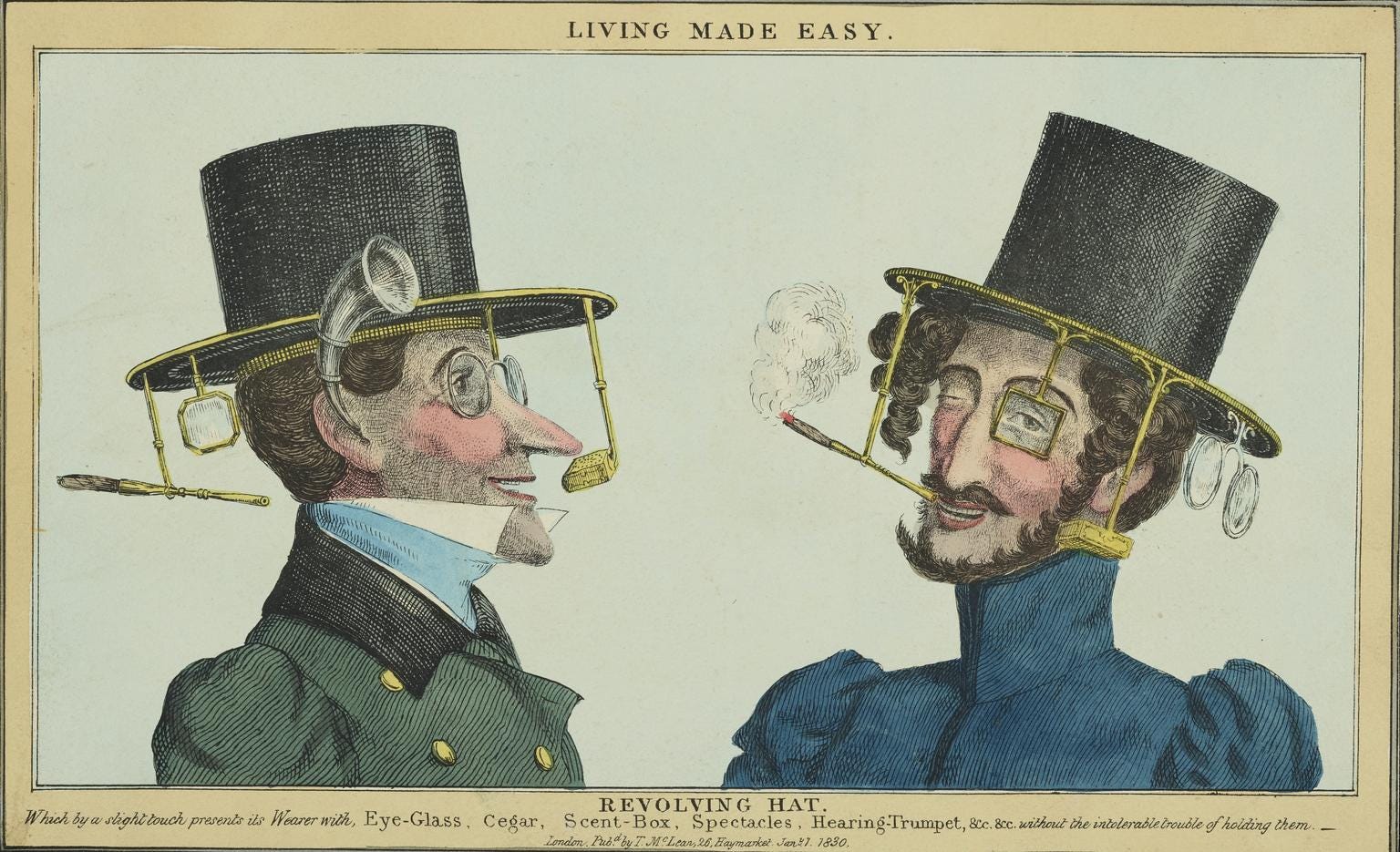
Print. Living Made Easy. Revolving Hat. / London. Pubd. by T. McLean, 26, Haymarket. Jany 1, 1830. http://creativecommons.org/licenses/by/4.0/
If Looks Could Kill!
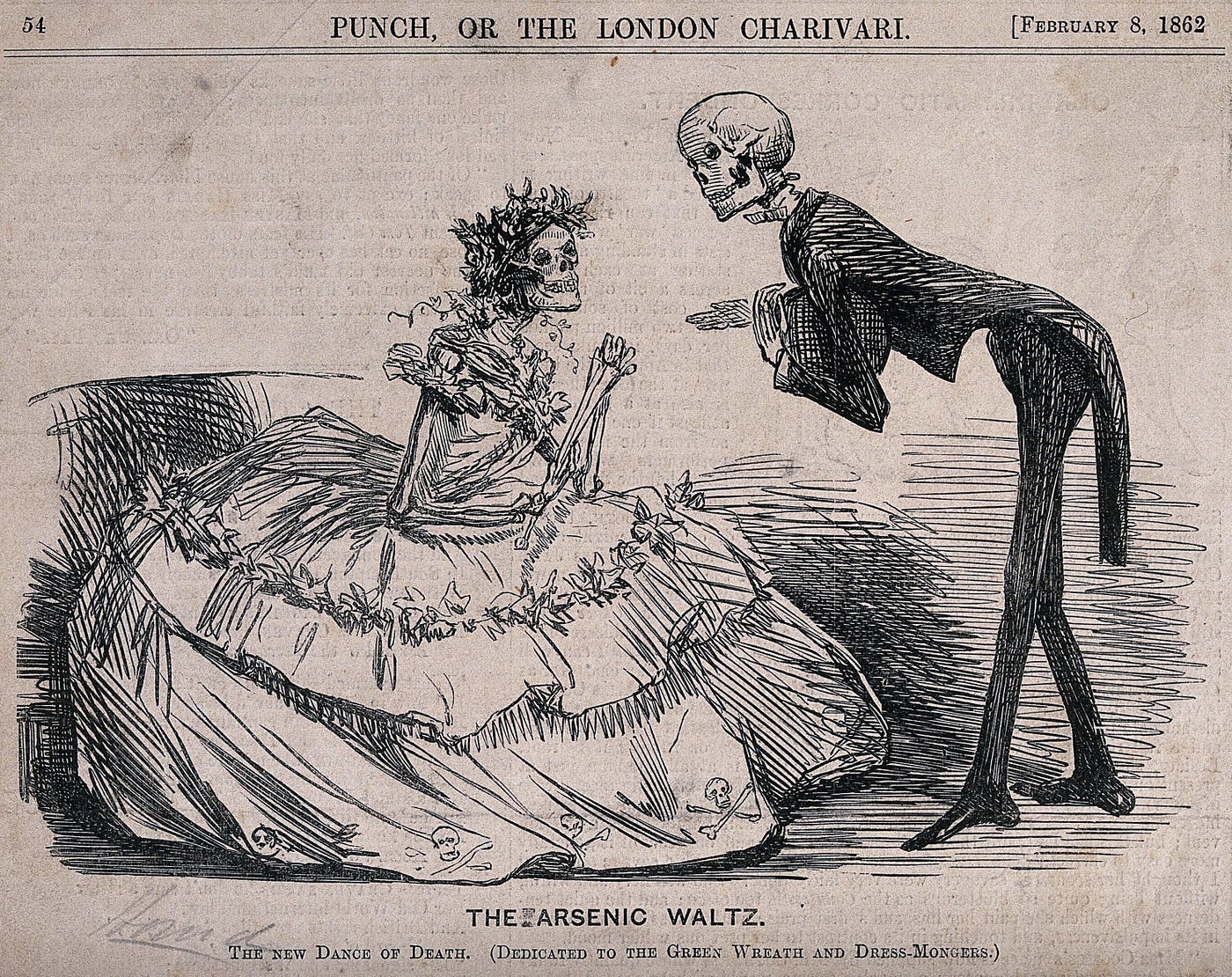
“Killing” was Victorian slang for an attractive person! In fact, some fashions of the time had a killer instinct - especially with those striking green dresses dyed with arsenic-laced pigments like ‘Scheele's Green’. Dubbed "killing" for their mesmerizing allure, these garments hid a deadly secret beneath their beauty. The British Medical Journal even warned that wearing one of these dresses was like strolling through a ballroom armed with enough poison to wipe out an entire crowd of admirers! Yet, despite the grim warnings, some daring fashionistas persisted, choosing arsenic's allure over the fashion crimes of "abominable grays, hideous browns, and dreadful yellows."
Two Left Feet!
Believe it or not, before 1850, shoemakers crafted shoes without distinguishing between left and right feet. This cost-saving measure, while efficient for the shoemaker, resulted in discomfort and deformity for the wearer. Additionally, individuals often resorted to binding their feet to fit into ill-fitting shoes, leading to further discomfort and sometimes injury. The practice of foot binding likely influenced tales like Cinderella, where characters endure extreme measures to fit into a too-small shoe, albeit with less-than-charming results. Thus, the expression "two left feet" not only hints at a lack of coordination but also reflects the historical realities of footwear and foot care.
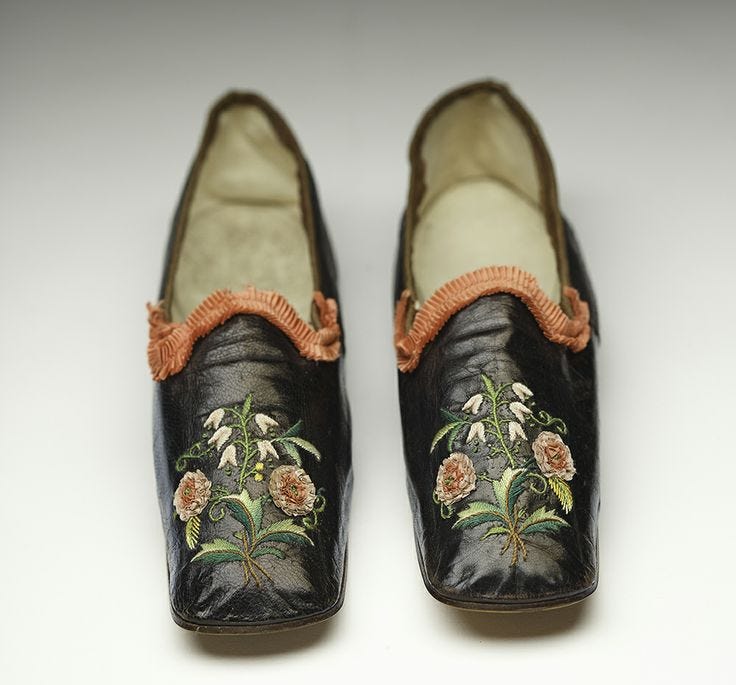
Extremely narrow 1840’s Victorian shoes with no left or right foot - Bata Shoe Museum, Toronto
The phrase "impeccably dressed" actually originated from a rather unexpected place—it originally meant to be dressed plainly, harkening back to its Latin roots meaning "without sin."
Stiff Collars: A Breathtaking Trend!
In the 19th Century, detachable collars were the fashion lifesavers... until they weren't. Stiffened to lethal stiffness with starch, these accessories earned the sinister nickname 'father killers' because they could cut off the blood supply to the carotid artery. Edwardian men, oblivious to the danger, sported them proudly, only to nod off in their armchairs, never to wake again. One unfortunate soul, John Cruetzi, met his demise in a park, the victim of an overzealous collar that cut off both his air supply and blood flow. The obituary? 'Choked by his collar,' of course.

Shocking Development!
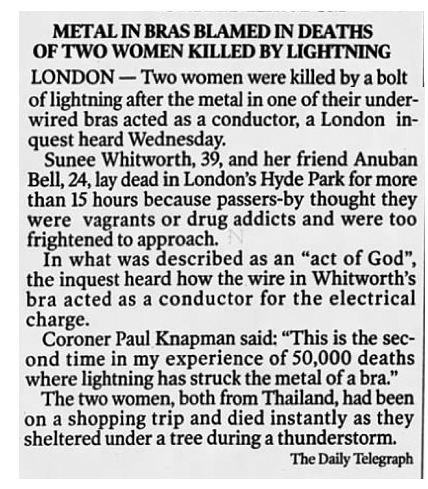
Fact or urban legend? In 1999 two friends tragically met their end in Hyde Park, London, struck by lightning allegedly conducted through the wire in their bras. The incident sparked debates over the safety of underwire bras during thunderstorms, with reports suggesting the metal components may have attracted the fatal discharge. The question lingers.
The Skinny-on-Skinny Jeans: A Dangerous Squeeze!
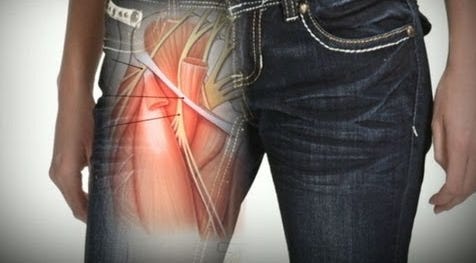
Compartment syndrome, a potentially fatal condition, can sneak up on you, especially when your choice of attire—like those trendy skinny jeans—decides to play havoc with your blood flow. Picture this: you're out and about, crouching and bending, when suddenly your muscles rebel against the constriction, leading to swelling and potential muscle breakdown. It's a cautionary tale of fashion meeting physiology in unexpected ways.